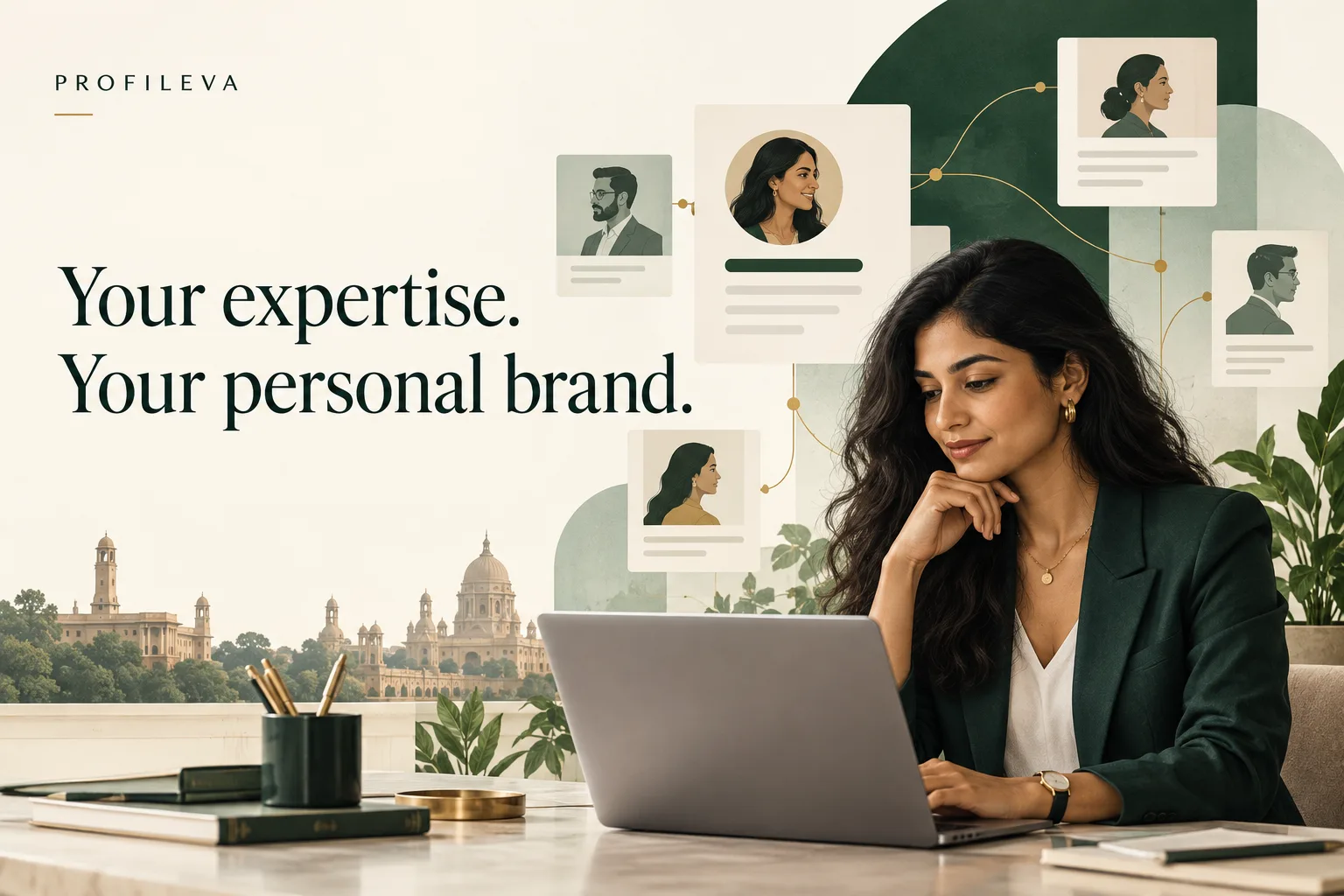
Before a recruiter calls you, a prospect agrees to a meeting or an investor replies to your email, there’s a good chance they’ve looked you up. Your LinkedIn profile may be one of the first results they see.
What they find shapes their first impression. It might be a clear picture of who you are and what you do well. It might be a half-filled profile with a vague headline and a job title from three years ago.
That gap is what LinkedIn personal branding is about. It isn’t about becoming an influencer. It’s about making sure the right people can quickly understand your expertise and trust what they see.
What Personal Branding Really Means
Personal branding is often confused with self-promotion, follower counts or a polished photo. Those things are surface-level. A real personal brand is simpler and more durable.
Your personal brand is the reputation people associate with your name when you’re not in the room. It’s built from:
- Clarity: people know what you do and who you help.
- Credibility: your claims are backed by real work, results or experience.
- Consistency: your profile, conversations and content tell the same story over time.
A smaller network of relevant connections can be more useful than a large, unfocused audience. A clear profile helps those connections understand your expertise.
Why Is Personal Branding Important for Your Career and Business?
The importance of personal branding shows up in practical moments, not abstract ones.
For job seekers and professionals
Recruiters often look at your LinkedIn profile alongside your resume. A clear profile helps them see where you fit and makes it easier to shortlist you for the right roles. A visible professional reputation can also lead to referrals, internal opportunities and conversations you didn’t know to ask for.
For consultants and freelancers
When clients can’t easily compare your work with someone else’s, trust decides who gets hired. A profile that shows how you think, what problems you solve and who you’ve worked with (where you’re permitted to say so) shortens that trust-building process.
For founders and small business owners
People often trust people before they trust companies. A founder who shares useful insights about their industry gives potential clients, partners, hires and investors a reason to take the business seriously, especially when the company is still young.
LinkedIn’s Growth in India: What the Numbers Tell Us
LinkedIn’s growing membership in India gives useful context to the importance of professional visibility. In February 2023, LinkedIn announced that it had crossed 100 million members in India (10 crore), making India its second-largest market after the United States, according to Business Standard’s report dated 8 February 2023.
By February 2026, the reported figure had reached 167 million members (16.7 crore). A Moneycontrol report published on 6 February 2026, citing a senior LinkedIn executive, reported 20% year-on-year growth and identified India as LinkedIn’s second-largest market by user base.
These are dated membership figures, not counts of daily or monthly active users. They do not tell us how many people regularly read posts, respond to messages, or will see an individual profile.
For professionals and business owners, our takeaway is practical: a growing professional network creates more possibilities for relevant connections, but membership growth alone does not guarantee visibility or leads. A clear profile, evidence of your work, useful content and genuine conversations give people reasons to engage with you.
Your Profile Is the Foundation of Your Personal Brand
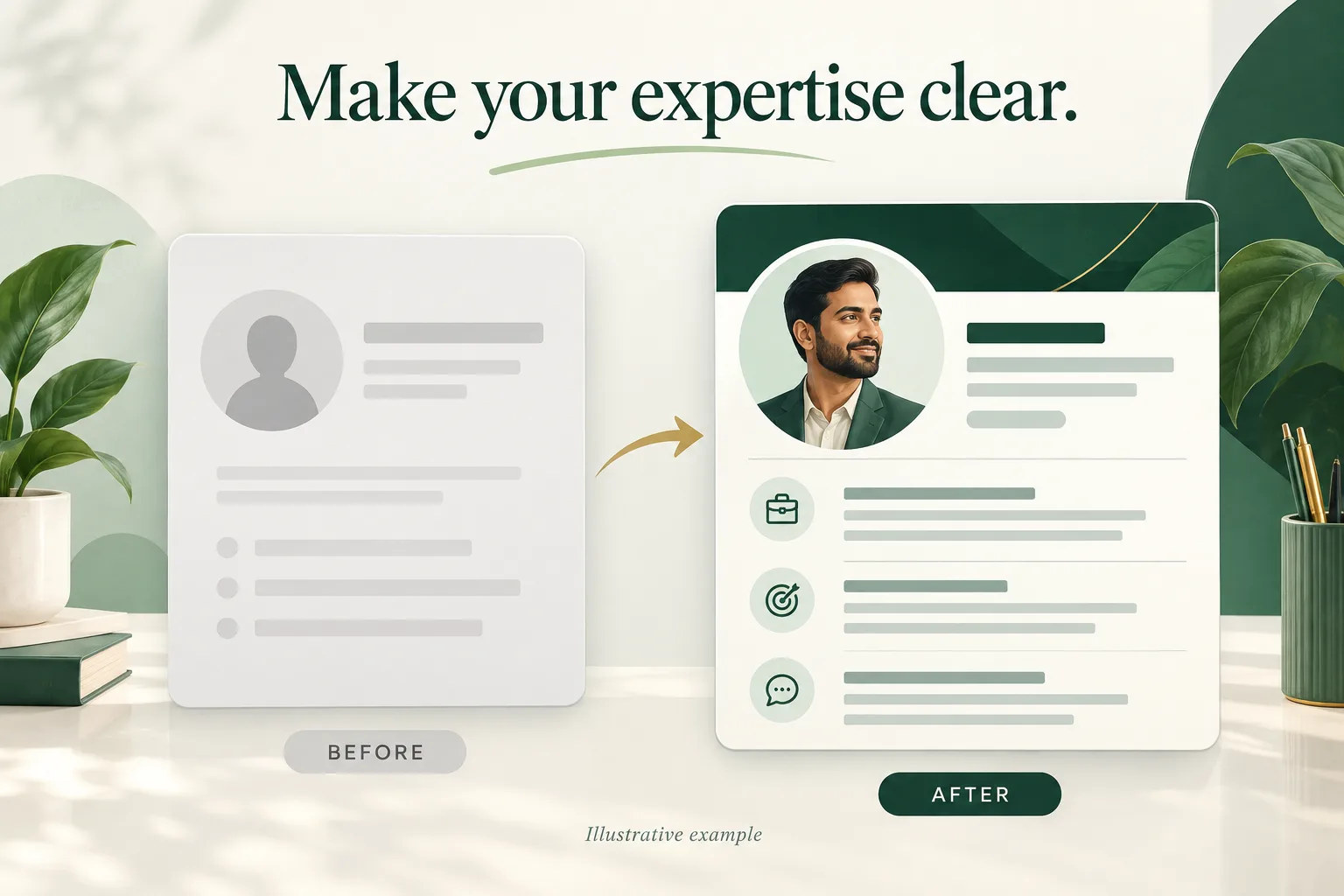
Content and networking bring people to your profile. Your profile decides whether they stay interested. Good LinkedIn profile optimisation focuses on four areas.
A headline that says what you do and for whom
“Seeking new opportunities” or “Manager at XYZ Pvt Ltd” tells people very little. A stronger headline combines your role, your focus area and the value you bring.
Compare:
- Sales Manager
- B2B Sales Manager | Helping SaaS companies grow mid-market accounts in South India
The second gives people a reason to read further.
An About section that sounds like a person
Your About section is your chance to explain your work in your own words. A useful structure:
- What you do and who you do it for
- The problems you’re good at solving
- A few specifics: industries, tools, types of projects
- What you’re open to, such as roles, collaborations or clients
Write in the first person. Keep paragraphs short. Avoid a list of adjectives like “dynamic, result-oriented, passionate”.
Experience that shows outcomes, not just duties
“Responsible for client management” describes a job. “Managed a portfolio of 25 enterprise accounts and led renewals for the western region” describes your contribution. Use numbers only when they’re accurate and you’re allowed to share them.
Evidence of real work
Featured posts, project links, case studies, presentations, certifications and recommendations all add proof. Evidence turns claims into credibility.
If your profile needs a structured refresh, a LinkedIn Profile Makeover can help you rework your headline, About section and experience so they tell one clear story.
Personal Branding Examples (Hypothetical)
The following are illustrative, hypothetical examples, not real clients or people.
Hypothetical example 1: Arjun, a sales professional in Pune
Arjun sells industrial automation solutions. His old headline just said “Sales Executive.” He changes it to show his industry focus, rewrites his About section around the problems manufacturers face, and shares a short post every week or two about what he learns from plant visits. He doesn’t share confidential client details. Over time, prospects who check his profile before a meeting see someone who understands their world, not just someone trying to close a deal.
Hypothetical example 2: Sneha, a job seeker moving into data analytics
Sneha is moving from operations into analytics. She updates her headline to reflect her target role, adds two portfolio projects to her Featured section, and writes about what she’s learning, including mistakes. She comments thoughtfully on posts by analytics leaders. Her profile now explains her career change instead of leaving recruiters to guess.
Hypothetical example 3: Rahul, a founder of a small D2C skincare brand
Rahul shares the realities of building a brand in India: sourcing, packaging decisions, customer feedback and lessons from failed experiments. He avoids constant product promotion. His posts give retailers, potential hires and fellow founders a clearer sense of how the business is run.
How to Build a Personal Brand on LinkedIn: Practical Steps
1. Decide what you want to be known for
Pick two or three themes connected to your work, such as B2B sales in manufacturing, careers in analytics, or building a D2C brand. Focus makes you memorable.
2. Share useful content, not just updates
Useful posts answer a question, share a lesson, explain a process or offer a perspective. A simple test: would someone in your field learn something or think differently after reading it?
3. Comment thoughtfully
Many people overlook commenting, but it can help you contribute to relevant professional conversations. A considered comment that adds an example or a respectful counterpoint is more valuable than “Great post!” It also introduces you to people outside your existing network.
4. Connect with relevance
Connect with people you’ve worked with, met at events, or genuinely want to learn from. Add a short, personal note explaining why you’re connecting.
5. Turn connections into conversations
A network is only useful if there are real relationships in it. Congratulate people sincerely, follow up after events and ask good questions. The aim is mutual value, not an immediate pitch.
How a Content Calendar Keeps You Consistent Without Daily Posting
Many professionals start posting with enthusiasm, run out of ideas in two weeks and go quiet for months. Consistency matters more than frequency.
A content calendar helps by:
- Planning themes in advance, so you aren’t staring at a blank screen
- Setting a realistic rhythm, such as one or two posts a week
- Balancing post types: lessons, opinions, behind-the-scenes, and helpful how-tos
- Linking content to your goals, whether that’s job search, client trust or hiring
You don’t need to post daily. A steady, sustainable pace, kept up for months, usually builds more trust than a burst of activity followed by silence. If planning is the hard part, a LinkedIn Content Calendar can give you a structured plan built around your goals and voice.
Common Personal Branding Mistakes to Avoid
Generic AI-written content
AI tools can help with drafts, but unedited AI posts often sound the same: vague, over-polished and full of buzzwords. Readers notice. Add your own experiences, opinions and specific details.
Exaggerated achievements
Inflated titles, unverifiable numbers or claims of “10x growth” can backfire, especially when former colleagues or managers can see your profile. Credibility takes years to build and moments to damage.
Irrelevant connection requests
Sending hundreds of requests to random people, or pitching right after someone accepts, weakens your reputation. Relevance beats volume.
Chasing follower counts
Followers who aren’t in your industry or target market rarely lead to meaningful opportunities. Focus on reaching and helping the right people, even if that audience is small.
Start With Clarity, Build With Consistency
LinkedIn personal branding isn’t about performing for an audience. It’s about making your expertise visible and easy to trust. As more Indian professionals and decision-makers use LinkedIn, a clear profile and a consistent, genuine presence can help the right opportunities find you.
Start small. Update your headline this week. Rewrite your About section next week. Plan a few posts around what you know well. Over time, those steady steps add up to a reputation that works for you.
Want your LinkedIn presence to reflect your work? Explore Profileva’s LinkedIn Profile Makeover or plan your topics with a LinkedIn Content Calendar.
FAQs
What is LinkedIn personal branding?
LinkedIn personal branding is how you present your expertise, values and professional reputation on LinkedIn through your profile, content, comments and interactions. The goal is to make it easy for the right people to understand what you do and trust your experience.
Do I need to post every day to build a personal brand?
No. Regular, thoughtful posting, such as once or twice a week, is usually more sustainable than daily posting. Commenting and conversations also count towards building your presence.
Is personal branding only for founders and influencers?
No. Job seekers, salaried professionals, consultants, freelancers and small business owners can all benefit. A clear professional reputation helps in hiring, client conversations, partnerships and career moves.
What should I fix first on my LinkedIn profile?
Start with your headline and About section, because they shape first impressions. Then update your experience with specific contributions and add evidence of your work to the Featured section.
Join the conversation